Sunday, November 20, 2016

When 1st Position Looks Different – Part Two

I’m carrying an extra 15 lbs in front and an extra big smile when I stand at the barre these days: my 6 month old Tiny Dancer is strapped in for the ride and it’s even better than I thought it would be.

I was extra excited to dance with her on October 4 – World Ballet Day 2016. I dressed Moira in the tutu onesie we were gifted with this summer, plus some baby legwarmers and - for the ultimate dose of cuteness - the pink, baby-sized ballet slippers.

 Mid-Pas de Cute!
(Step of the Cute)

After the photo shoot captured the moment for posterity (and her future graduation and wedding slideshows), I strapped her in her carrier, took the obligatory selfie, and we danced together once again.

We were joined by our YouTube friend, former New York City Ballet Soloist Kathryn Morgan as her Easy Ballet Barre Video began. As I went through the exercises, accompanied by Kathryn’s beautiful piano music of Disney and Broadway hits, Moira cooed and giggled, smiled at our reflections in the mirror of our office ballet studio, and kicked her feet along with my movements. She already has quite a powerful grand battement and sometimes the shoes end up across the room, however the slippers stayed on that time.

I still modify the exercises so I can do them with her safely. The first time I tried a grand pilé in 1st while wearing her, everything cracked – my hips, my knees, my ankles – and I couldn’t get back up without pulling on the barre. Not exactly proper grand pilé alignment! So instead, I work on deepening my demi-pilés in 1st, 4th and 5th position and only go for the grand in 2nd.

All port de bras need modifying too, since it’s not safe to bend forward at the waist or too far to the sides while baby-wearing. I always take her off to stretch and for the final grand battement exercise. Other than these modifications, this is an excellent barre video to do with a baby. Her extra weight really makes me work on proper alignment through my core and the footwork strengthens my feet and legs. I still stand by my standard disclaimers that I’m not a health care professional and you should consult yours when planning to baby-wear while exercising and do what’s best for you.

And did I mention how much fun it is for the both of us?

It’s the most fun I’ve ever had doing a basic ballet barre! Though I want to keep working on the basics and maintaining proper technique, I’m not out to be the perfect dancer or to impress anyone. My main goal, when I strap on my baby and step into my ballet shoes, is to be in the moment and just enjoy dancing with my girl.

Because this Mom thing is a hard job.

The nights are long and some days are filled with doubt and second-guessing. But it’s also full of so much joy. Dancing with her is joyful and I consider it a huge victory that it’s an activity that balances taking care of her with taking care of me.

Dancing with Moira has also helped me get motivated to get back into dance class shape. My goal is to keep working through Kathryn’s videos along with some yoga, so I can take more dance classes in Paris in the New Year.

I don’t know if Moira will want to dance when she’s older and I promised myself (and my husband) that I won’t be one of those Crazy Dance Moms if she does dance. It has to be fun, first and foremost. That’s the moto my mom went with when I was a young dancer and it’s a good principle to live by.

I do hope that our dancing together helps to instill an appreciation for music and movement. I want her to enjoy being active and moving her body. I want her to be happy and healthy and to find many moments of joy herself.

Until then, we’ll find them together when we dance our special pas de deux.

Some tips for Dancing while Baby-Wearing:

1-Check your baby’s diaper first. Unless you want a new definition of Dirty Dancing, this is just common sense.

2-Make sure your baby is secure in their carrier. Common sense again.

3-Modify exercises when necessary. See my suggestions for modifications to grand pilé and port de bras exercises above.

4-Watch for your baby’s sleepy cues. Sometimes the movement and the music can lull Baby off to Sleepy Town (You're welcome!), so be prepared to press pause and resume after you've put your Tiny Dancer down.

5-Have fun and make it your own! I like to talk through the exercises with Moira, hold her little hand or even say the counts out loud to her.

I also never pass up a chance to share an extra smile or funny face in the mirror with my girl. That’s not something I can do in a regular dance class and that’s the whole point(e).

Happy Dancing to All Dancers, the Big and the Small!


The Dancer Abroad and the Tiny Ballerina


Friday, October 14, 2016

When 1st Position Looks Different...

It started off like any other ballet barre workout: I ran through my checklist of positioning and alignment, like all dancers everywhere, when I started my pliés.

Rest hands lightly on the barre.

Turn out from the hips.

Engage the abs.

Tuck the pelvis under.

Pull up and press the feet into the floor.

Knees over toes.

And then I laughed at out since I could barely see my feet at all. My baby bump was squarely in the way.

At 32 weeks pregnant, first position looked very different.


I enjoyed dancing throughout my pregnancy for so many reasons. It was good for my growing and changing body, it was good for my mind and it was wonderful for my soul. It kept me active and helped ease some of the pregnancy discomfort of sore hips, back and feet. It gave me a comforting, familiar activity to do during a very unfamiliar and somewhat anxious time.

And it was a great way to connect with my baby. I loved feeling her little feet and hands respond to the music and to my movements. It was a very special pas de deux.

Before I go any further, it’s important I give the same disclaimer from my Yoga for Dancers post: I’m not a healthcare professional and though I’ve been dancing for most of my life and have even taught dance, I don’t consider myself an expert. I can only speak to my own personal experience. I talked to my doctor and my midwife about dancing while pregnant, as I would recommend anybody do. You need to do what’s best for you.

For me, that meant alternating gentle ballet barre workouts with prenatal yoga, taking lots of walks and meditating.

I followed Kathryn Morgan’s Ballet Barre videos with a few modifications as things progressed: no forward port de bras, very small port de bras backwards, extra special attention to hip placement and low extensions. It was really interesting to feel how my body was changing and to figure out how to adjust to those changes. No surprise, the biggest shift I felt was in my balance. I really had to work on engaging all the muscles in my ankles, legs, core and arms to compensate for my bump pulling me out of alignment.

I searched and searched for a prenatal dance class in Paris but I just didn’t have any luck, hence why I opted to dance at home. But if you’re in the Edmonton area, check out J’adore Dance for their excellent pre and post-natal dance classes. My sister did Salsa Mama dance class there with both her boys and they now offer a Ballet and Barre Mama class.

Most yoga studios offer special prenatal yoga classes. Do some research beforehand and ask around so you can find the right class for you. Additionally, there are tons of prenatal yoga videos on YouTube. Again, be mindful of how you feel and always check in with your doctor/midwife/healthcare providers.

Another perk of dancing while pregnant was the exciting thought of having something in common with some of the top Ballerina Moms and Moms-to-Be around the world:

Dana Stephensen, Soloist with The Australian Ballet, recently celebrated her son’s first birthday and her return to dancing full-time this season. Check out her excellent blog and Instagram account, The Balance Point(e) for her insights into balancing dance and motherhood, plus tips for healthy eating and general wellness.

Principal Dancers Heather Ogden and Guillaume Côté of The National Ballet of Canada are expecting their second child, a sibling for their young daughter Emma, in January 2017. Their announcement on NBC’s Facebook page was beautiful and garnered thousands of ‘Likes’ and comments from well-wishers around the world, including yours truly - The National Ballet even ‘Liked’ my comment back!

New York City Ballet Principal Ashley Bouder documented her pregnancy on Instagram with her own hashtag #Bouderbump. There’s a great photo of her, sweaty and beaming post-performance with her fiancé and an 8 week sticker on her belly, having just performed the roles of Odette and Odile in Swan Lake at two months pregnant - like a boss! Her little girl Violet was born the day after my Moira made her grand entrance, also by C-section. It’s cool to know I have a badass C-section scar just like one of the best ballerinas in the world; that definitely bolstered me during my recovery.

Though I was never whipping myself around in perfect fouetté turns at six months along like Ashley was in this video, I was always proud and thankful to be dancing while pregnant. It kept me happy, healthy and connected to my Tiny Dancer and I will cherish those memories forever.

It also reaffirmed how much I love to dance and how much I looked forward to dancing and sharing that with my girl.

And that’s something so special, it needs its own blog post.


Watch the blog for Part Two of When 1st Position Looks Different coming soon!

37 weeks pregnant at Le Centre de Danse du Marais
Photo credit: Crystal Hedeman

Sunday, August 21, 2016

Paris Opéra Ballet: Giselle

A Dancer Abroad marked its two-year anniversary in June, so we celebrated by taking in Giselle, our final performance of the 2015-2016 Paris Opéra Ballet season.

Marc Chagnall's great ceiling at Opera Garnier never gets old.
It’s the Classic of the Classics and is often touted as one of the great ballets of the Romantic era. Its use of mime throughout pays homage to the choreography of the great Marius Petipa, “the most influential ballet master and choreographer in ballet history” and it features one of the most demanding roles for a ballerina to perform, both in terms of technique and characterization.

Such history breeds high expectations and raises the stakes for the company who dares take on the mighty Giselle. Naturally, the Paris Opéra Ballet rose to the occasion and then delivered on every possible level: technique, character complexity, ensemble, music, costumes and emotional impact.

Giselle tells the story of a simple peasant girl who is wooed by a handsome stranger visiting her village. As they flirt and dance together, young Giselle falls in love with this dashing gentleman, much to the chagrin of her mother. Unbeknownst to her, the man is actually Prince Albrecht in disguise and he is already engaged to the lovely Lady Bathilde. Giselle does not heed the repeated warnings of her mother against the dangers of dancing and falling in love so quickly and is devastated to discover the true identity of her mystery man.

So acute is her shock and humiliation in front of the entire village and Lady Bathilde’s entourage, Giselle goes mad, tearing out her hair, threatening the crowd with the Prince’s sword and eventually collapsing in Albrecht’s arms, literally dead of a broken heart.

Act Two resumes in the nearby woods at twilight, where Giselle’s spirit joins the Wilis, the collective souls of women who have been betrayed and spurned by love. They are merciless in their torment of the men who cross their path and make them dance until they die of exhaustion. This is the fate that awaits Albrecht as he lays flowers on Giselle’s grave in an act of repentance for misleading her.

Myrtha,The Queen of the Wilis, is deaf to his pleas and sentences him to death. Giselle, being kind and pure of heart, forgives him and protects him until dawn. His remorse and love is found genuine and Giselle is released from the Wilis. As she and the Wilis disappear with the rising sun, she is finally at peace and the Prince is alone – exhausted and grief-stricken – but alive thanks to the forgiveness of his fallen love.

A story so rich and tragic demands performances of the highest caliber and Myriam Ould Braham’s Giselle hit all the right notes. She combined flawless technique with multifaceted characterization to capture Giselle’s innocence and vulnerability; a sweet, bright-eyed bird flitting joyfully across the stage, feather-light in her leaps and extensions, her expressions full of dreams and naiveté. Her descent into grief and madness was harrowing to witness because it was all too familiar; who hasn’t ever felt that same pain of a broken heart? Her spirit character contrasts her anguish with a soothing calmness in her forgiveness of Albrecht, giving her the courage to defy the Wilis and protect him. Braham’s performance was truly a feat of strength and grace.

Mathias Heymann’s Albrecht was dashing, brash, arrogant, yet tender and ultimately sincere in his heartache over Giselle. The sheer physical strength in his jumps and turns was astounding. His final series of leap after leap was mesmerizing and his exhaustion was palpable as he eventually collapsed, front and center, powerless to resist the wrath of the Wilis. Normally, male dancers are supposed to make it all look so effortless but Heymann’s character allowed the effort to show and the struggle to remain upright was real. He was tremendous.

And as for the Wilis, Hell hath no fury than a corps of women scorned.

They were at once ethereal, beautiful and terrifying. Clad in white, flowing tutus, the image of their long, laces veils suddenly being whisked away was haunting. With some billowing fog and eerie, shadowy lighting thrown in, the Wilis’ calm, calculating presence and perfect unison was deliciously chilling, just like a ghost story’s perfect villain should be.

Giselle was the whole package - romance, tragedy, mystery, drama, redemption – the perfect bow to wrap up our season with the Paris Opéra Ballet. This company’s range never ceases to amaze and inspire me. From contemporary ballet, to Rudolph Nureyev’s old-school classic, new choreographers Anne Teresa der Keersmaeker and Justin Peck, to the Grand Masters – Rudolph Nureyev, George Balanchine, Jerome Robbins – from the short, statement pieces, to the big, sweeping epics, we journeyed far and wide through passion, dance, music and this great city.

The journey continues next season and I can’t wait to see where we’ll be swept up to next.


Opera Garnier in Summer


Thursday, April 7, 2016

Paris Opéra Ballet: Ratmansky, Robbins, Balanchine, Peck

I recently had a date at the ballet with four ballet choreographic masters: Alexei Ratmansky, Jerome Robbins, George Balanchine and Justin Peck.

It was ballet at its most simple and pure, danced with the incredible heart and passion of the Paris Opéra Ballet ensemble, at the always spectacular Palais Garnier. The simple staging of each piece split the focus equally between the dancers and the musicians, reminding us all of the special partnership between music and dance.

The orchestra pit was empty at Palais Garnier because the music was all onstage with the dance.

Seven Sonatas – Alexei Ratmansky

Russia-born Alexei Ratmansky is currently the Artist in Residence at The American Ballet Theatre in New York City. A dancer with The Ukrainian National Ballet, The Royal Winnipeg Ballet and The Royal Danish Ballet, Ratmansky the choreographer is well-known for his original works and for successfully “restaging traditionally classical ballets for large companies”. He is the master behind the 2011 production of Romeo and Juliet for The National Ballet of Canada and his most recent big production was the February 2016 restaging of Petipa/Ivanov’s Swan Lake in Zurich, Switzerland.

His original piece Seven Sonatas premiered at ABT in 2009 and is new to the Paris Opéra Ballet’s repertoire this season. Accompanied onstage by a stirring rendition of Domenico Scarlatti piano sonatas, it was the most complex structurally of the evening. The ensemble of six dancers, three males, three females, alternated between full cast, solo, duet and trio variations as they flitted effortlessly across the stage. Donning simple, ethereal white costumes, the dancers – especially the ladies – seemed to float as though dancing above the stage, their feet barely audible, their lines endless, their arms lithe and flowing.

It was a gorgeous ballet to start the evening and I’m sure it will continue to delight Paris audiences for many years to come.

Other Dances – Jerome Robbins

Having been a fan of Jerome Robbins’ choreography since the first time I saw West Side Story, I was really excited to finally see one of his ballets. A five-time Tony Award Winner, two-time Academy Award Winner (Best Director and Best Choreography 1961, West Side Story), former Artistic Associate and Ballet Master of The New York City Ballet, his style is one that blends musicality with intricate, lightning-fast footwork.

Other Dances premiered at NYCB in 1976 by dancers Natalia Makarova and Mikhail Baryshinkov and has been in POB’s repertoire since 1999. It was a simple, yet lively duet between dancers Ludmila Pagilero and Mathias Heymann, set to the piano music of Frederic Chopin. It had a springtime, folk-dance flavour, complete with simple, lavender costumes and a soft, dreamy lighting design. The dancers flirted and wooed each other in that joyous, playful Robbins’ flair. It had none of the drama of West Side Story, but it showed off the classical side of Robbins’ choreography, of which I’m definitely eager to see more.

Duo Concertant – George Balanchine

George Balanchine is often referred to as the “father of American ballet”. Born in Russia, where he trained with the Imperial Ballet School, his choreographic “neo-classical” style blends ballet technique with Broadway and Hollywood dance influences. He is the founder of the School of American Ballet and the New York City Ballet, he had a long-time collaboration with composer Igor Stravinsky and created the majority of NYCB’s repertoire, which is still taught and performed to this day.

Duo Concertant is a romantic double-duet between two dancers and two musicians who each take turns showcasing and acknowledging each other’s’ talents. The dance has a lovely sense of spontaneity, as though the dancers are hearing the music for the first time and letting it inspire their every movement. The lighting design also interacts with the dancers, mimicking the moonlight and highlighting different aspects of the dancers’ bodies, giving the whole piece a sense of mystery and intrigue. It was my favorite piece of the evening because of its simple beauty and the way the dance and music played off each other.

Plus getting to see Balanchine’s choreography in Paris? A huge check off my Ballet Bucket-List.

In Creases – Justin Peck

The most contemporary piece of the night was saved for last and Justin Peck’s dynamic In Creases did not disappoint. It reflected the youth and energy of Peck himself, being the youngest of the featured choreographers and currently the Resident Choreographer of the New York City Ballet. He choreographed his first ballet in 2008 and his star has risen steadily as “he’s since created over 25 new works” for ballet companies across the US; the two most recent being The Most Incredible Thing and In the Countenance of Kings for NYCB and San Francisco Ballet, respectively.

In Creases, in its’ Paris Opéra Ballet premiere, was the most athletic and aesthetically different piece of the evening. Fast-paced and electric, the dancers flew for 12 minutes of jumps and extensions, accompanied by dueling pianos playing Philip Glass. They brought the performance to a rousing, satisfying conclusion.

Overall, it was a brilliant evening of dance at its most timeless. It celebrated some of the best choreography of the past and present, and the music that gives dance its heartbeat and soul.

The simplicity of the evening was what really struck me. Just a piano, some strings and beautiful choreography – at Palais Garnier, what more could be needed?

For other posts on the Paris Opéra Ballet's 2015-2016 season, check out:

Rudolph Nureyev’s La Bayadère from December 2015.


Anne-Teresa De Keersmaeker from November 2015. 


Monday, March 28, 2016

World Theatre Day 2016: Looking Back at The Globe Theatre

You know you’re a theatre nerd when you – somehow - don’t cry during your wedding vows, but you cry at the Globe Theatre in London four days later on your honeymoon.

True story.


A full house on July 31, 2013. A Midsummer's Dream come true!
Maybe it was partly the jet-lag, but when my husband and I sat down in the upper gallery of Shakespeare's Globe, on July 31 2013, to see a performance of A Midsummer Night’s Dream, one of my theatre dreams came true and I can’t deny being very “moved”.

To say it was wonderful would be a huge understatement.

Before we took our seats, we saw the stones engraved with names of donors to the theatre and prominent actors who regularly perform in plays by The Bard; seeing Sir Patrick Stewart’s was a very special thrill for many nerd-related reasons.


Excited Theatre Nerd or Trekkie? You decide.

Fast-forward a few years into the future and now we’re living in Europe, only 3 hours by Eurostar away from London and I’ve had the opportunity to not only take dance class in London (and make some of my dance dreams come true), but I’ve been able to see some incredible shows on the West End stage AND revisit my beloved Globe for a special tour.

No performances were taking place on that day last spring, so we got to tour the galleries and the ‘pit’ where the ‘groundlings’ stood, and still stand, to watch shows today. Prior to meeting the rest of the group in the lobby area, we also took in a detailed exhibit of the history of the Globe, as well as some of the beautiful costumes and props from recent productions.


View from the approach.
Alas, no nerdy tears were shed during this excursion. 

But it was still exciting to be in the theatre with only 60 other people when it can hold up to 1,600 when it’s sold out. I was with my friend Laura, who was finishing up her PhD at Oxford so I was in good, nerdy company with someone who not only understood, but appreciated my special brand of theatre fangirl-ism. She took some fantastic photos of me and the two of us together right by the stage and we both enjoyed our tour guide’s dry sense of humor and knowledgeable quips.


#GlobeTheatreSelfie
Photo Credit: Dr. Laura Ludtke

Fun facts I learned from the tour:

*The Globe as it currently stands, is not where the original theatre was but it’s very close – only 750 feet from the original site.

 *Back in Shakespeare’s day, plays weren’t actually published. The theatres owned the plays they produced so there would only be one production of said play at any given time. However, piracy existed even back then…

*A group of actors from a rival theatre went to every performance of Hamlet, memorized as much of it as they could, wrote it down and performed it later in their theatre. Since this would be the Elizabethan era’s version of recording a film on your cellphone and uploading it to YouTube, can you take a guess at the quality level? That version, apparently published as the ‘Bad Quarto’, is according to our guide, “laughably terrible”.  

*There are also Bad Quartos of other Shakespeare plays, such as Romeo and Juliet, Henry V, and The Merry Wives of Windsor, as well as another play attributed to Shakespeare called The Merry Devil of Edmonton.

(Please – someone back in my hometown of Edmonton, AB, produce this play! Think of the marketing potential!)

*The theatre district of Bankside back then was the equivalent of a rocking red-light district, full of seedy taverns and pubs, bear-baiting, brothels and other general debauchery. Sounds a lot like the Fringe…

*The original Globe burned down in 1613 when the actors performing Henry VIII “thought it would be a cool idea to fire a canon inside a wooden building with a thatched roof”. This is a near-direct quote from our guide. The theatre was, however, rebuilt only a year later.

I genuinely enjoyed the tour, especially getting to be so close to where the magic happens. But I couldn’t help wanting a bit more – like the chance to go onstage and then backstage and up to the balcony where the musicians perform. I understand it’s probably too difficult to do that during the performance season, but still, one can hope.

Maybe next time, I’ll get the chance to ‘tread the boards’ of the mighty Globe Theatre and say a few lines of text…but from which play? The prologue from Romeo and Juliet? Puck’s epilogue from Midsummer? The monologue of Juliet taking the sleeping potion that got me the highest mark and a standing ovation at theatre school back in 2003? Words, words, words – which ones will I dare speak?

Let’s be real though – if, no - when I get the chance to stand centre stage at the Globe, I know I will first and foremost be too overcome to speak and cry big, theatre-nerd tears before I can pull it together and deliver.

As Puck would say: What fools these mortals be!

Happy World Theatre Day 2016 and go see a play!

All the World Is A Stage...
Photo Credit: Dr. Laura Ludtke


For more information about World Theatre Day, check out: 

http://www.world-theatre-day.org/

For more about Shakespeare's Globe, including information about tours and performances, check out:

http://www.shakespearesglobe.com/


Monday, February 8, 2016

London West End Theatre: The Curious Incident of the Dog in the Nighttime

My recent London experience of The Curious Incident of the Dog in the Nighttime was one of those rare instances when I went to a show knowing virtually nothing about the story, the characters or the overall production. All I knew going in was the show is based on the book of the same name; I didn’t even know who the author was – Mark Haddon – or that it won the Tony Award for Best Play in 2015.

I was relying solely on the advice of my theatre friends back home in Canada, who swore fervently their viewing experiences of this show were nothing short of “life-changing”.

That’s an all-or-nothing kind of statement to make but since I trusted my sources, it was all I needed to be convinced.

London's beautiful Gielgud Theatre
As we sat there in our seats at the Gielgud Theatre, waiting for the show to start, my husband asked me what the show was about. All I could do was answer truthfully: “I don’t know, but it’s supposed to change our lives.” And when the lights finally dimmed, I felt my excitement reach a whole new level because I honestly had no idea what to expect.

I certainly wasn’t anticipating the show to start at full-tilt, with a loud, booming electronic musical score that jolted me out of my comfortable, spectator zone. The bright lights snapped up on a nearly bare stage, painted black and white in a precise grid pattern on the floor and walls, with a motionless dog and a boy poised in the center. Such a beginning demanded my full attention before taking off at break-neck speed into the story of Christopher, an eccentric, 15 year-old mathematical genius/detective investigating the titular curious incident of the death of a neighbor’s dog in the nighttime.

Along the way, through the narration of Christopher’s teacher, who reads from his personal notebook, and other scenes and monologues of the supporting cast of characters, more and more is revealed about the life of the unforgettable protagonist. The mysteries surrounding Christopher’s relationships with those around him, his hopes and dreams of becoming a scientist and the secrets and complexities of his family, are unraveled. Through a vivid, innovative light and sound design and brilliant, truthful performances from all the actors, we were invited to experience the world through Christopher’s beautiful, yet complex mind. The extremes of the technical elements highlight his perception of the world: sounds are jarring and a little too loud, the lights on the grid are a little too bright, and Christopher himself is a little too honest in his interactions.

These extremes are tempered somewhat in the second act, as Christopher makes choices and takes chances that give him more insight and understanding of the world. His journey and the creative way in which it’s told reminded me the quest of another eccentric, yet brilliant child protagonist seeking the truth, Oskar Schell, from Jonathan Safran Foer’s novel Extremely Loud and Incredibly Close.

Without giving too much away, as I believe this production should be experienced as presently and as in-the-moment as possible, two stand-out scenes deserve mention: Christopher’s monologue about space and being an astronaut, and his adventure in navigating the twists and turns of the London Underground for the first time. Both scenes deftly combine the virtuosity of the young actor playing Christopher (the incredible Siôn Daniel Young), the commitment of the ensemble cast, and the brilliant design elements into beautifully choreographed movement sequences emphasizing Christopher’s wonder, excitement and confusion.

The Curious Incident of the Dog in the Nighttime is a superbly acted, exquisitely designed and boldly executed production about family, discovery, courage and love. Seeing it with my husband was a special experience as he found himself captivated by the story and the spectacle and deeply affected by the characters. He wasn’t expecting that kind of theatrical experience either and we both couldn’t stop thinking about it and discussing it for the rest of our weekend in London.

I’m so glad I took it on faith and went into this show as blind as I did because it was such a pure viewing experience, free of predispositions and expectations and it also reaffirmed what I love most about theatre: the creative possibilities of storytelling are limitless, as are the ways one can be affected by a compelling story.

Life-changing indeed.

A ticket bought on the faith of friends' recommendations

For more about The Curious Incident of the Dog in the Nighttime in London, including ticket and tour information, check out http://www.curiousonstage.com/

For information about the Broadway production of The Curious Incident of the Dog in the Nighttime, check out http://www.curiousonbroadway.com/


For audiences in Edmonton, Alberta, Canada, you will have the opportunity to witness this spectacular production as part of The Citadel Theatre’s 2016-2017 Season. 


Thursday, December 31, 2015

All the World's a Stage

“All the world's a stage, And all the men and women merely players.”

William Shakespeare wrote these timeless words for his comedy As You Like It. It’s a beautiful speech about the ages of Man and how each stage of life can be thought of as acts in a play: infancy, childhood, adolescence, adulthood, old age, etc. These words and that show hold a special place in my heart as the Shakespeare production the Red Deer College Theatre Program’s class of 2004 – my class – performed.

However, I like to think of it in a slightly different, more literal, way.

I think of how theatre plays a part in all cultures around the world and the actual physical buildings that house this important cultural work. After over a year of living in Europe, I’ve been fortunate to see many great, grand, beautiful theatres and I’ve been even luckier to have been able to see some of the performances they harbour.  Each theatre is unique and impressive in its own way, whether it be for its history, architecture or both, and they all have one big thing in common: they are all works of arts in and of themselves that present other works of art.

As my gift to you on this beautiful New Year’s Eve, here are some of my favorite photos of the some of the many different theatres I’ve seen and visited throughout Europe this year. I can't wait to go back to some of them to see more dance and theatre and to celebrate more stories of people around the world.


All the world truly is a stage. 

Palais Garnier, Paris, France.


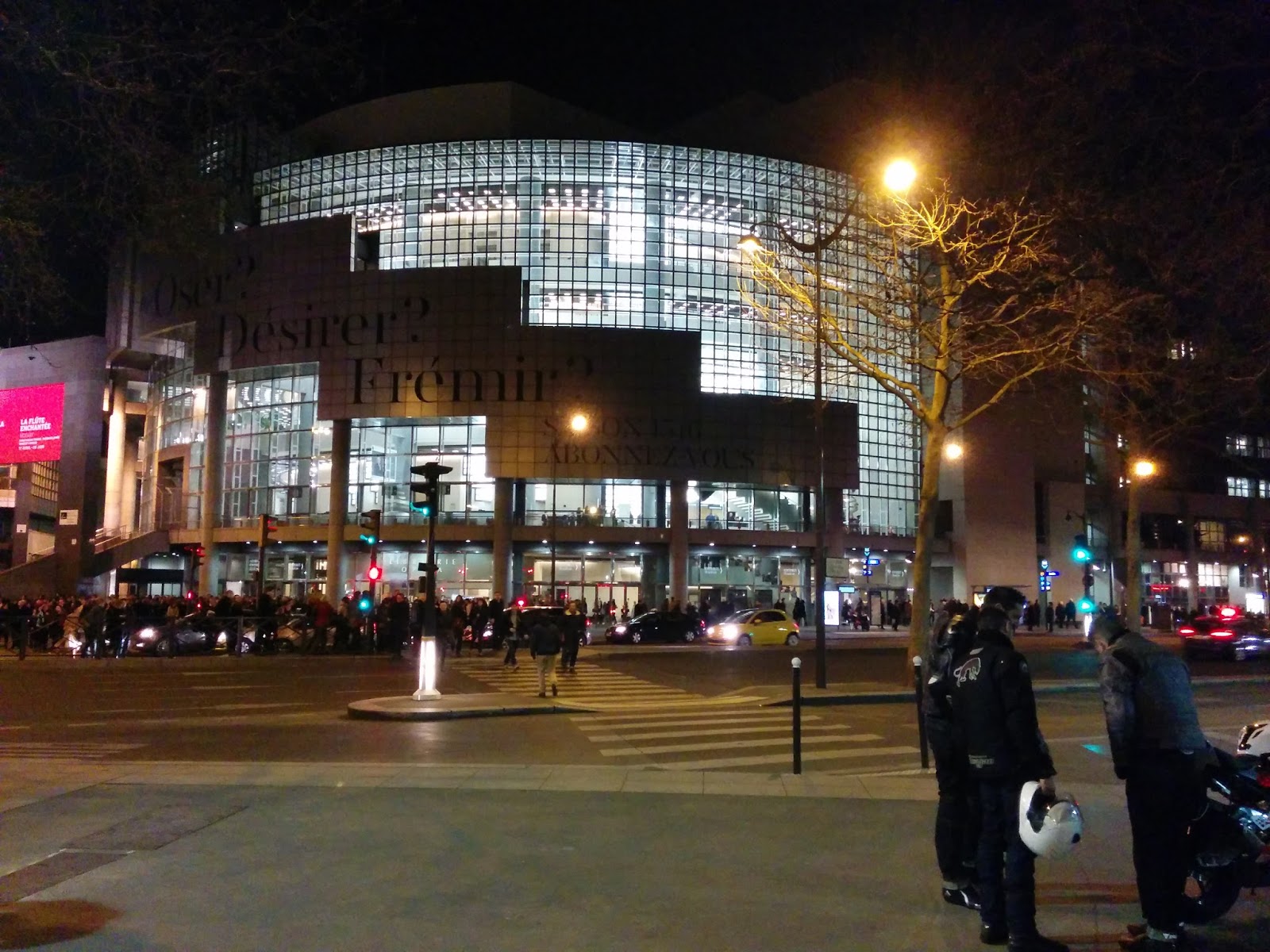
Opera Bastille, Paris. France.


Royal Puppet Theatre, Toone Bar in Brussels, Belgium.


Royal Opera House, London, England.


Victoria Palace Theatre, London, England.


The Globe Theatre, London, England.


Grand Théâtre de Genève, Geneva, Switzerland


Opéra Comédie, Montpellier, France


Strasbourg Opera House, Strasbourg, France


Moulin Rouge, Paris, France.